Management
How AI is Transforming Metalworking in 2026
Upskilling employees with AI is not simply just a reactive measure; it’s a proactive strategy to bring a workforce into the future
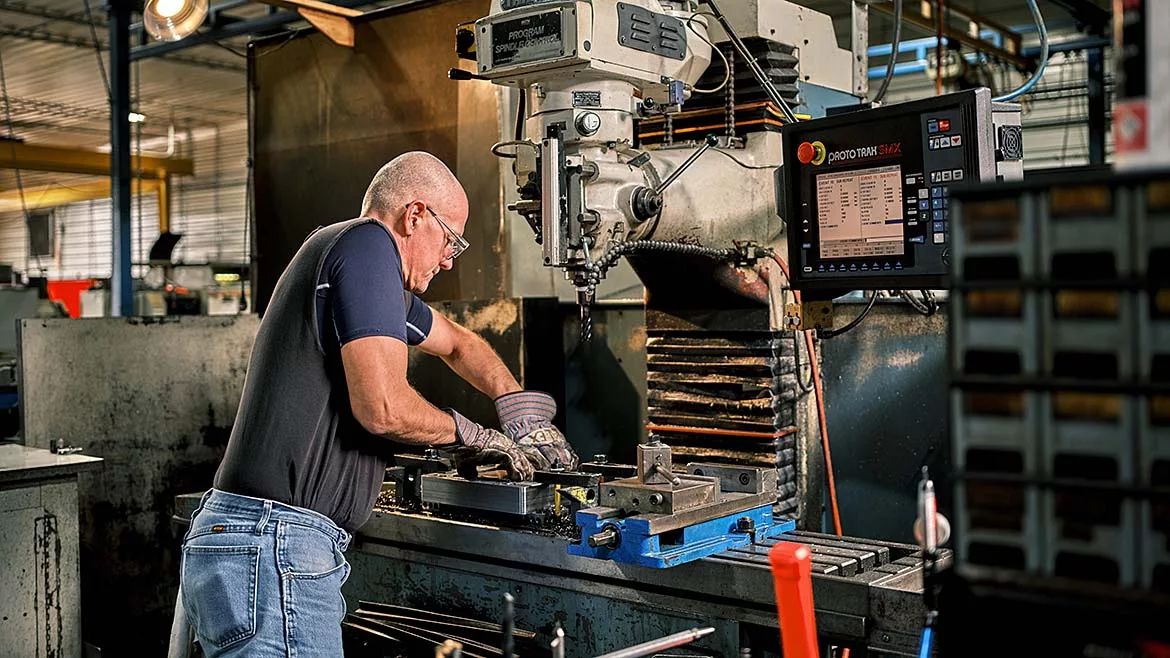
Metalworkers have long faced the familiar pressures of a shrinking workforce and unpredictable supply chains. In 2026, AI offers unprecedented opportunities to address these issues. Manufacturers will switch from defense to offense, embracing this transformative technology in full force. In fact, over 84% of leaders are accelerating their adoption of digital technologies, and 80% are investing 20% of their improvement budgets into smart manufacturing initiatives.
AI is jumpstarting a new wave of manufacturing excellence, bringing fresh momentum to innovation across the entire value chain. Metalforming job shops now have new ways to strengthen their teams and enhance production in the face of disruption. Here is look back at these challenges and how AI is beginning to create a clearer path forward.

Harnessing AI to meet the labor shortage
The manufacturing industry continues to grapple with a persistent labor shortage. The Manufacturing Institute found that more than 3.8 million jobs will need to be filled by 2033, yet 1.9 million are expected to remain open. With fewer hands on the shop floor, manufacturers risk losing business simply because they cannot meet rising order volume. It’s no surprise that more than 65% of companies surveyed identified recruiting and retaining workers as their number one business challenge.
To meet this head on, it is crucial that job shops adopt creative strategies to get the most out of their existing employees, which is where AI becomes a powerful ally. By investing in AI tools and training, shops can upskill employees to leverage AI to maximize their productivity and accuracy. AI programs can also be more attractive to younger workers looking for roles that match the technology use they are accustomed to in their daily lives, making them a key differentiator to help attain new talent. If employees can develop an AI-ready mindset, they can drive faster company growth, improve resilience during labor fluctuations, and help create a workplace that performs at a higher level even with leaner staffing.
To start, employees should be given an overview of the AI tools available to them and their companies’ existing usage policies. They should then be guided through real examples to see when AI use is appropriate and given advice from those who have implemented them long term.
On the shop floor, AI-driven predictive maintenance systems and inspection tools can be implemented to flag early issues in performance and quality, helping to reduce downtime and keep production schedules on track. This is a critical advantage when skilled machinists and maintenance technicians are in limited supply. AI can also support training by accelerating onboarding and skill development for automated machining centers, robotic welding arms, and CNC systems, which are equipped with advanced programming capabilities to help boost production output. AI can further strengthen knowledge transfer. By recording demonstrations, drafting detailed procedural notes, and capturing the expertise of veteran workers, AI helps preserve critical knowledge that might otherwise disappear as experienced employees retire. In this way, AI not only improves daily operations but also safeguards the long-term intelligence of the shop.
Agentic AI, which can autonomously perform actions and make decisions without ongoing human oversight, also provides significant opportunities to improve efficiency. By taking over planning and quoting, agentic AI reduces repetitive work and frees employees to focus on higher value responsibilities. Teams can also leverage AI to develop standard operating procedures to fast-track onboarding and strengthen consistency, helping employees improve while evolving company processes in tandem.
Ultimately, upskilling employees with AI is not simply just a reactive measure; it’s a proactive strategy to bring a workforce into the future. By aligning staff capabilities with AI advancements, metalworking job shops can build a resilient team ready for the next wave of innovation.

Building AI-backed supply chain resilience
Compounding the effects of the labor shortage are recent tariffs and global supply chain disruptions. These have impacted metalworking shops significantly, especially those dependent on imported raw materials like steel and aluminum. The industry is seeing a shift toward reshoring and nearshoring, where shops source materials and components from domestic suppliers or nearby countries. Agentic AI can support this shift by identifying and engaging with alternative suppliers in real-time as supply chain disruptions bubble to the surface.
Embracing AI and other advanced technologies is proving invaluable for metalworking shops seeking to navigate these challenges. Real-time equipment monitoring and automated scheduling tools optimize resource allocation, reducing dependence on skilled labor, and ensuring consistent production. For instance, a shop leveraging ERP-integrated scheduling can automatically adjust workflows the moment supply constraints appear, limiting downtime and keeping orders on track. AI’s ability to rapidly analyze production data can also be the difference when supply chain disruptions occur, minimizing waste and maximizing throughput by allowing for quick pivoting.
By integrating these digital tools into their supply chain strategies, metalworking shops can build agility, improve operational efficiency, and position themselves for long-term growth. AI is truly setting the stage to achieve operational excellence and helping shops maintain a strong competitive edge in the years ahead.
.jpg)
Go forth and innovate
The metalworking job shop sector is at the forefront of manufacturing’s transformation. AI’s influence on mitigating the labor shortage and building supply chain resilience is not abstract thought—it’s already shaping the reality of day-to-day production and decision making on the shop floor.
By adopting AI and automation, metalworking shops can streamline operations, remove bottlenecks and stay ahead of the curve. AI training ensures that employees have the skills and confidence to harness these innovations effectively. Meanwhile, resilient supply chain tools and strategies position job shops to navigate global disruptions and align with customer expectations. Organizations that act decisively today will not only overcome the challenges of 2026, they will emerge as leaders in an industry undergoing rapid evolution at a remarkable speed. The opportunity is clear, and the time to innovate is now.
Looking for a reprint of this article?
From high-res PDFs to custom plaques, order your copy today!